A Guide To Ramat Eshkol
Let me tell you about Ramat Eshkol, a neighborhood that represents a pivotal moment in Jerusalem’s history and embodies the complex realities of the city’s contested status in ways that few other neighborhoods do. Ramat Eshkol sits in northern Jerusalem, built on land that was no-man’s land and Jordanian territory before the Six-Day War of nineteen sixty-seven, making it one of the first Jewish neighborhoods established in what had been the eastern, Jordanian-controlled part of the divided city. To understand Ramat Eshkol is to understand how Jerusalem transformed from a divided city into the united capital that Israel claims today, and how the demographics, politics, and daily realities of that unification continue to shape life in this neighborhood.
The story of Ramat Eshkol begins with the end of the Six-Day War in June nineteen sixty-seven. When Israel captured East Jerusalem from Jordan, the city was suddenly reunited after nineteen years of division. The border that had split Jerusalem between Israeli West Jerusalem and Jordanian East Jerusalem, the concrete walls and barbed wire and minefields that had made the city two separate entities, were torn down almost immediately. Israeli leaders, particularly Jerusalem mayor Teddy Kollek, moved quickly to establish facts on the ground that would make the unification permanent and irreversible. One of the first steps was building Jewish neighborhoods in the newly captured areas.
Ramat Eshkol was among the very first, begun literally within months of the war’s end. The site chosen was strategic: a hillside area in northern Jerusalem that had been partly no-man’s land between the Israeli and Jordanian positions and partly territory Jordan had controlled. From this elevated position, you could see the entire city spread below, including the Old City with its golden Dome of the Rock, the Mount of Olives, and the valleys and hills that define Jerusalem’s dramatic topography. The land was largely empty, some rocky hillside with a few scattered Arab houses, and the Israeli government moved quickly to establish a substantial Jewish presence there.
The neighborhood was named for Levi Eshkol, who had been Israel’s prime minister during the Six-Day War and who died in nineteen sixty-nine while the neighborhood was still under construction. The name honored him but also established a Zionist narrative on this newly captured territory, claiming it as intrinsically Israeli through nomenclature.
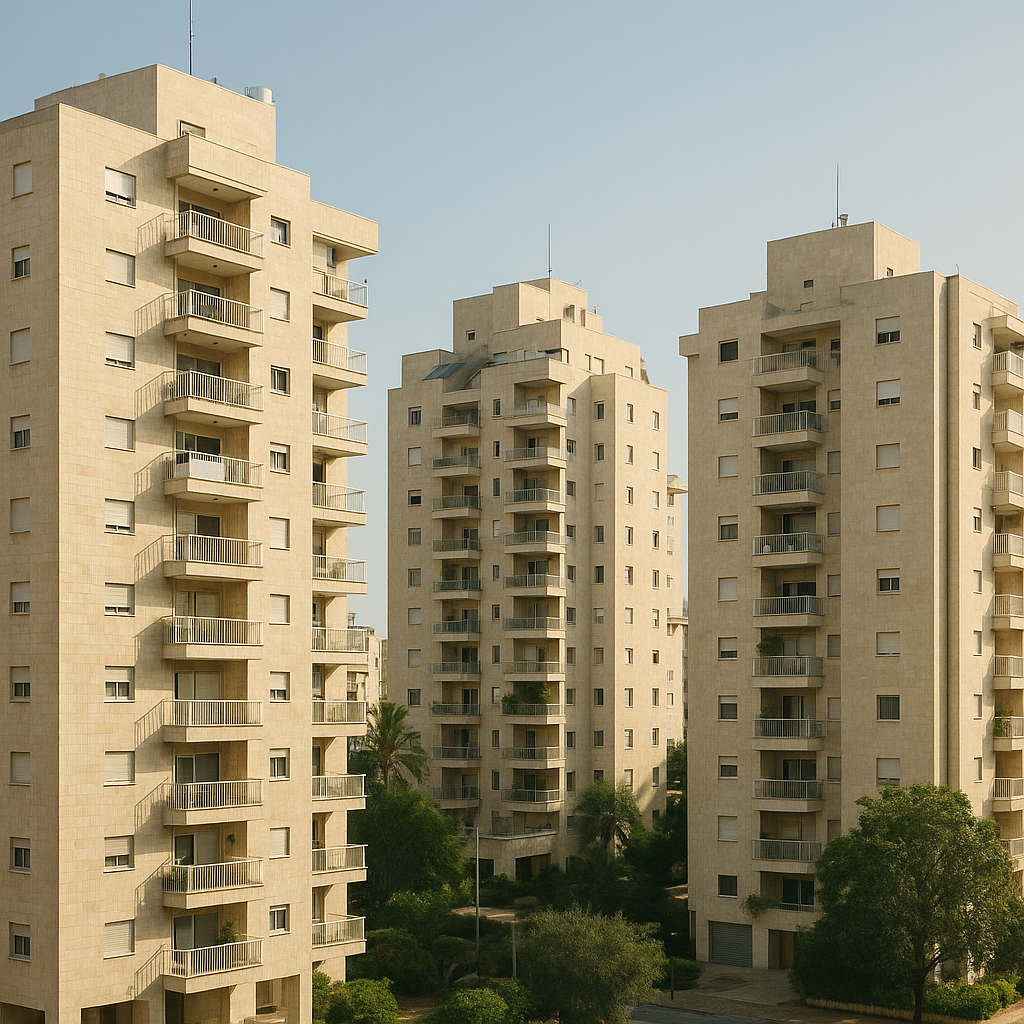
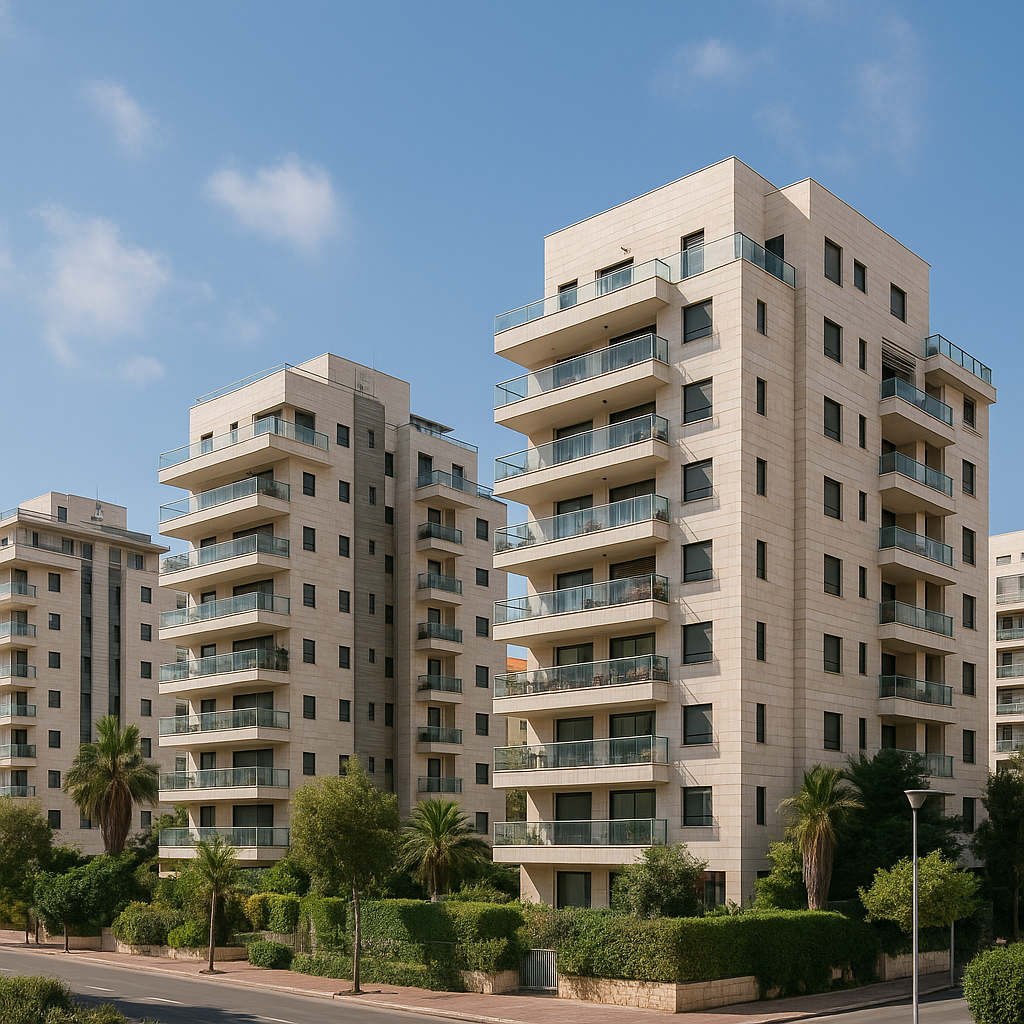
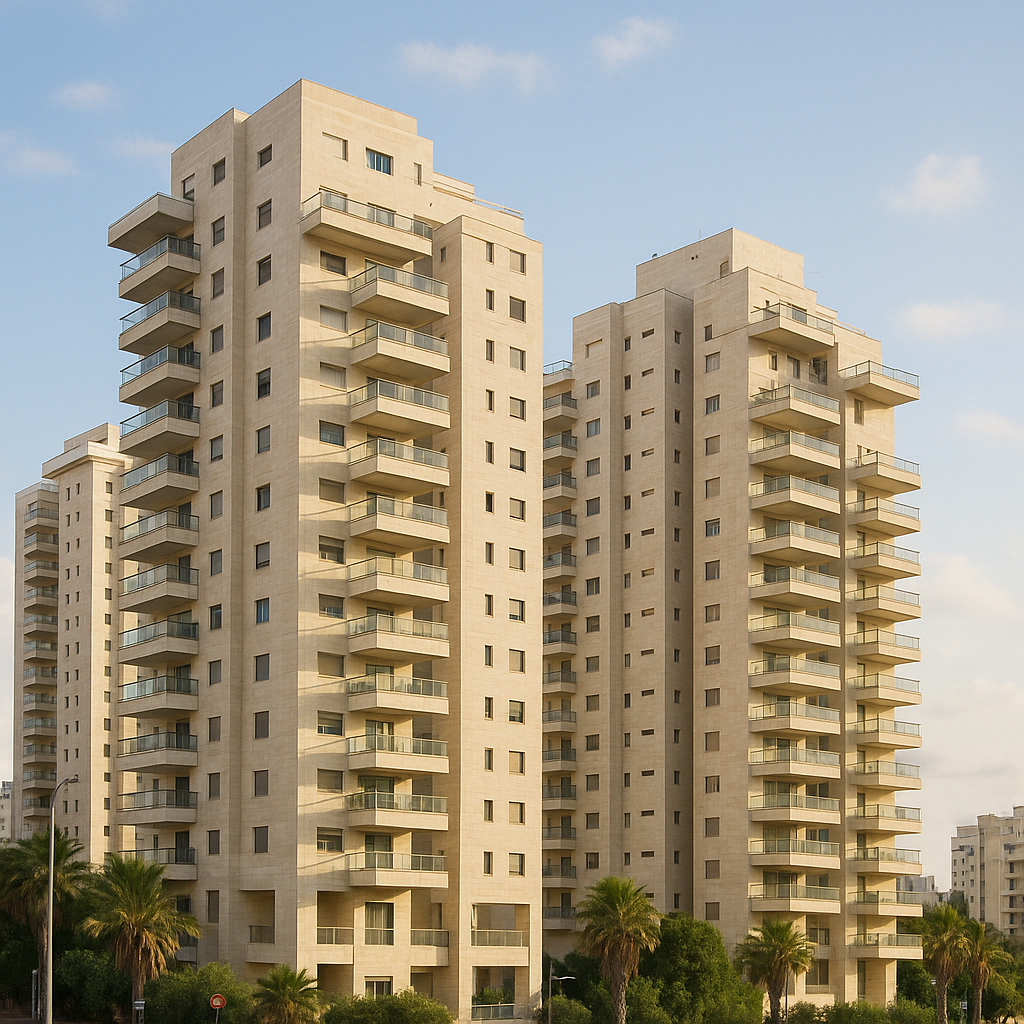
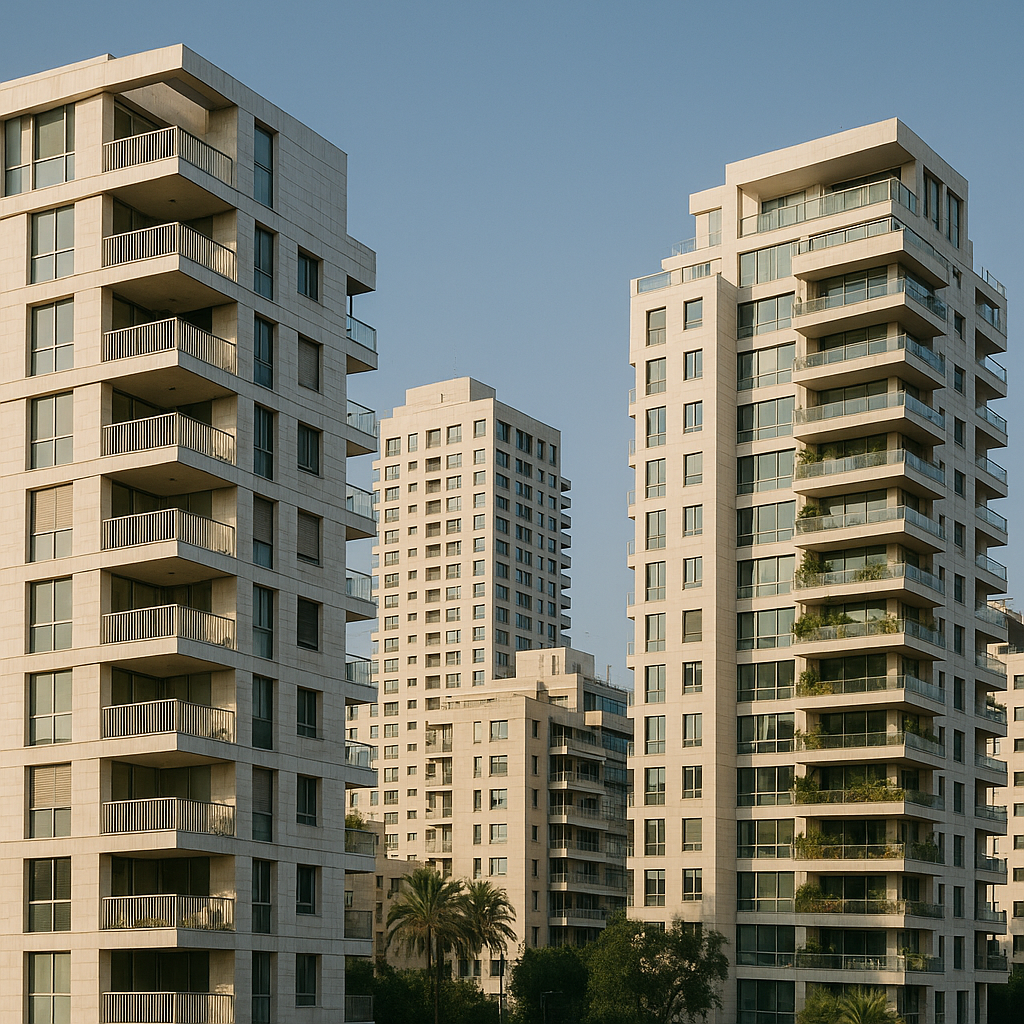
Construction proceeded rapidly with a sense of urgency and national mission. This wasn’t careful urban planning like Rehavia or organic neighborhood growth like the German Colony. This was state-directed development aimed at creating demographic facts, housing as many Jews as possible in the newly united Jerusalem as quickly as possible. The result was large-scale apartment construction in a relatively uniform style: buildings of eight to twelve stories, modernist in design, organized around central courtyards and green spaces, with wide streets and generous spacing between buildings.
The architecture reflected the period, late nineteen sixties and early seventies, with influences from international modernism but adapted to Jerusalem requirements including the mandatory use of Jerusalem stone cladding. The buildings were solid and well-constructed, far better than the utilitarian blocks thrown up in absorption neighborhoods like Talpiot in the fifties and sixties, but they lacked architectural distinction or particular charm. They were functional, middle-class housing designed for quantity and speed rather than aesthetic achievement.
The first residents of Ramat Eshkol were a mix that reflected Israeli society in the late sixties and early seventies. There were young couples starting families, drawn by relatively affordable new housing and the modern amenities. There were government employees and professionals, encouraged to settle in the newly united Jerusalem. There were immigrants, particularly from English-speaking countries and Latin America, attracted by the newness and the modern standards. And there were established Jerusalemites from older neighborhoods who saw opportunity in the spacious new apartments and pleasant surroundings.
What’s crucial to understand is that Ramat Eshkol was built very consciously as a bridge between West and East Jerusalem. It sits geographically between the older Jewish neighborhoods of West Jerusalem and the Arab neighborhoods of East Jerusalem. It connects to both, serving as a link in the unified city that Israeli planners envisioned. The neighborhood was designed with this bridging function in mind, with major roads running through it to connect western and eastern portions of the reunited capital.
Over the following decades, Ramat Eshkol developed and matured into a stable, middle-class neighborhood. The young families who moved in during the seventies raised their children there, and some of those children stayed, creating a second generation with deep roots. The neighborhood attracted a diverse population: secular and religious, Ashkenazi and Mizrahi, native Israelis and immigrants from around the world. This diversity became one of Ramat Eshkol’s defining characteristics, making it less homogeneous than neighborhoods dominated by a single religious orientation or ethnic group.
The religious makeup settled into a rough balance, perhaps forty to fifty percent traditional or Modern Orthodox, thirty to forty percent secular, and ten to twenty percent ultra-Orthodox, particularly in certain sections adjacent to Haredi neighborhoods. This mix meant that Ramat Eshkol developed a tolerant, live-and-let-live atmosphere where different communities coexisted generally peacefully, each respecting the others’ space and practices.
Today’s Ramat Eshkol is home to somewhere between fifteen and twenty thousand residents, a substantial population spread across the neighborhood’s considerable area. The demographic skews older than in neighborhoods attracting young professionals, with many residents being the original settlers or their children, now middle-aged or elderly. There’s also a significant population of young Orthodox families attracted by reasonable prices and the religious infrastructure, and a continuing stream of immigrants, particularly from France, Ethiopia, and the former Soviet Union.
The Anglo population in Ramat Eshkol is modest but present, perhaps ten to fifteen percent. The neighborhood has attracted English-speaking immigrants over the decades, particularly those seeking affordable housing with reasonable proximity to the city center and a diverse, tolerant atmosphere. There are Anglo-oriented synagogues and some English-language programming, but this is not an Anglo enclave like Baka. English-speakers here are integrated into a broader Israeli context.
The real estate market in Ramat Eshkol reflects its middle-class character and location. Prices are significantly lower than in prestigious neighborhoods like Rehavia or even gentrifying areas like Katamon, but higher than working-class neighborhoods like Talpiot. A three-bedroom apartment might sell for three point five to five million shekels, roughly one million to one point four million dollars, compared to six to nine million in Rehavia or three to four million in Talpiot. This makes Ramat Eshkol accessible to middle-class families who are priced out of more expensive areas but want something better than the most basic housing.
The apartments themselves are generally spacious by Jerusalem standards. The buildings from the sixties and seventies were constructed when space was less constrained and standards were more generous than in today’s construction. A typical three-bedroom apartment might be ninety to one hundred twenty square meters, with good room sizes, decent storage, and often balconies with views. The buildings have elevators, parking is often available though not always sufficient, and the construction quality, while not luxurious, is solid and durable.
Many apartments have been renovated over the decades, with updated kitchens and bathrooms, new flooring, and modernized systems. Others remain largely original, with fixtures and finishes from the seventies or eighties showing their age but generally functional. Unlike in gentrifying neighborhoods where gut renovations creating designer showcases are standard, in Ramat Eshkol renovations tend to be practical and moderate, updating what needs updating but not pursuing luxury for its own sake.
The neighborhood layout is spacious and green, with buildings organized around landscaped courtyards, wide streets lined with mature trees, and numerous small parks and playgrounds scattered throughout. This generous spacing, impossible in today’s land-constrained Jerusalem, gives Ramat Eshkol an open, airy feeling quite different from dense urban neighborhoods. Children play safely in the courtyards and parks, elderly residents sit on benches in the shade, and the overall atmosphere is peaceful and residential.
One of Ramat Eshkol’s major features is its spectacular views. From many apartments and from various points throughout the neighborhood, you can see across Jerusalem in all directions. To the south, the Old City with the Dome of the Rock. To the east, the Mount of Olives and the Judean Desert beyond. To the west, the hills of western Jerusalem. To the north, the mountains of Samaria. These views are not marketed aggressively like they might be in wealthy neighborhoods, but they’re a real and constant presence, a daily reminder of Jerusalem’s extraordinary geography and beauty.
The commercial infrastructure in Ramat Eshkol is practical and neighborhood-focused. There’s a commercial center with a supermarket, small shops, cafés, banks, pharmacies, and services meeting daily needs. This isn’t a destination for shopping or dining, there are no trendy restaurants or boutique stores, but the basics are covered conveniently. The supermarkets offer competitive prices and adequate selection, the bakeries and small groceries serve local needs, and the handful of simple restaurants and falafel stands provide affordable eating options.
There are also larger commercial areas on the neighborhood’s periphery, particularly near the French Hill junction where bigger stores and services cluster. Residents can access major shopping centers elsewhere in Jerusalem relatively easily, but for daily needs, the neighborhood commercial infrastructure suffices.
Education in Ramat Eshkol offers options reflecting the diverse population. There are secular state schools serving non-religious families, state religious schools for the Modern Orthodox community, and some ultra-Orthodox institutions for Haredi families. The schools are generally adequate, solid middle-class institutions serving their communities competently without being particularly distinguished or prestigious. They’re not the elite schools that draw families from across the city like Gymnasia Rehavia or Pelech, but they provide decent education in reasonably functional environments.
For preschool, there are numerous gannim serving different populations and offering different approaches. Working parents can find full-day care, religious families can find gannim matching their observance level, and those seeking particular pedagogical approaches have some options. The quality and resources are middle-tier, better than in struggling working-class neighborhoods but not approaching the enriched, expensive programs in wealthy areas.
The synagogue scene in Ramat Eshkol reflects the religious diversity. There are Modern Orthodox synagogues serving the religious Zionist population, some with significant Anglo membership and English-language programming. There are traditional Sephardic synagogues serving Mizrahi communities. There are some Haredi shuls in areas where ultra-Orthodox families concentrate. The variety means most families can find a religious community that fits their practice and preferences without traveling outside the neighborhood.
On Shabbat, Ramat Eshkol takes on mixed character. In areas with higher religious concentration, the streets are quiet with minimal traffic, families walk to synagogue, and Shabbat observance is visible and dominant. In more secular areas or mixed streets, some cars move, some stores might be open on the periphery, and Shabbat is observed individually rather than collectively. This patchwork observance, neither fully secular nor fully religious, characterizes Ramat Eshkol and requires a certain tolerance and flexibility from all residents.
Transportation is one of Ramat Eshkol’s practical strengths. The neighborhood is well-served by buses connecting to various parts of Jerusalem, including frequent service to the city center, the Hebrew University campus on Mount Scopus, and other major destinations. The light rail, while not directly serving Ramat Eshkol, is accessible with a bus connection or moderate walk, providing excellent access to downtown and beyond.
For those with cars, Ramat Eshkol’s location offers good access to major roads. Highway One, the main Jerusalem-Tel Aviv highway, is easily reachable. Roads heading north toward Ramallah and south toward the city center and beyond are accessible. The neighborhood itself has wide streets that accommodate traffic relatively well, though parking can be challenging in the denser areas and around the commercial centers.
For those commuting to Tel Aviv, Ramat Eshkol is not ideal but workable. The distance to the train station requires crossing the city, making the commute lengthy, but it’s feasible for those willing to invest the time. Many residents work in Jerusalem itself, taking advantage of employment opportunities in government, education, healthcare, and the diverse service economy.
The social scene in Ramat Eshkol is neighborhood-based and community-oriented without the intensity or density of social infrastructure in more homogeneous neighborhoods. Religious families find community through synagogue, with Shabbat meals, learning groups, and lifecycle celebrations creating social networks. Secular families socialize through schools, workplace connections, and personal friendships. The diversity means social circles can be diverse as well, with religious and secular, Ashkenazi and Mizrahi, native Israelis and immigrants mixing more than in more segregated neighborhoods.
There’s less of the organized Anglo community infrastructure found in places like Baka, fewer book clubs and formal organizations, but English-speakers find each other through synagogues and informal networks. The French community is perhaps more organized, with French-language programming and social networks reflecting the significant French immigration to the neighborhood.
For children, after-school activities include sports programs, scouts and youth movements, music lessons, and various enrichment activities. The options are reasonable without being exceptional, adequate for middle-class families without approaching the extensive programming available in wealthier neighborhoods. Parks and playgrounds provide space for unstructured play, and the safe, family-friendly atmosphere means children enjoy considerable freedom.
The atmosphere in Ramat Eshkol is stable, middle-class, and somewhat suburban despite being within Jerusalem proper. It’s not exciting or trendy, not cultured or sophisticated in the way of Rehavia, not cosmopolitan and cafe-centered like the German Colony, not intensely communal like Baka. It’s comfortable and practical, a place where families live ordinary lives, where the focus is on raising children and managing daily responsibilities rather than on lifestyle or status.
There’s a certain faded quality to parts of Ramat Eshkol, the sense of a neighborhood built with optimism in the late sixties that has aged without dramatic renewal or reinvention. The buildings show their decades, the public spaces are pleasant but not spectacular, the commercial centers are functional but uninspiring. This isn’t decay exactly, but it’s not the vibrant renewal of gentrification either. It’s stability, for better and worse, a neighborhood that has found its character and level and maintains them without dramatic change.
The political dimension of Ramat Eshkol cannot be ignored, though it’s often invisible in daily life. This neighborhood was built on territory captured in war, on land that the international community largely does not recognize as legitimately Israeli. The Palestinians and much of the world consider Ramat Eshkol a settlement, part of Israel’s occupation of East Jerusalem, an obstacle to peace and a violation of international law. Israel, and the residents of Ramat Eshkol themselves, consider it an integral part of united Jerusalem, the eternal capital of the Jewish people, as legitimate as any neighborhood in West Jerusalem.
For most residents, this political complexity is abstract, not part of daily consciousness. They live in what feels like a normal Israeli neighborhood, paying Israeli taxes, voting in Israeli elections, sending children to Israeli schools, living Israeli lives. The proximity to Arab neighborhoods, visible from many windows, is simply part of the landscape, not a constant political statement. But the reality is that Ramat Eshkol’s existence, like that of all Jewish neighborhoods built in East Jerusalem after nineteen sixty-seven, is contested, part of the larger Israeli-Palestinian conflict that defines the region.
This contested status has practical implications. International organizations often won’t locate in East Jerusalem neighborhoods, considering them settlements. Some foreign passport holders living in Ramat Eshkol face complications with their home countries which may not recognize addresses in East Jerusalem. The neighborhood’s future is theoretically on the table in any final status negotiations, though no Israeli government has seriously considered relinquishing control and no resident can imagine such a scenario.
Adjacent to Ramat Eshkol are Arab neighborhoods, and the boundary between Jewish and Arab Jerusalem runs near or through parts of the area. This proximity creates complex relationships and occasional tensions. Economic relationships exist, with Arabs and Jews shopping in each other’s commercial areas, using the same roads, occasionally working together. But social integration is minimal, two populations living in proximity but largely separate, each in their own world with their own institutions and networks. Security incidents occasionally affect the area, though Ramat Eshkol itself has been relatively quiet compared to some border neighborhoods.
The challenges facing Ramat Eshkol are those of middle-class neighborhoods everywhere: aging infrastructure needing investment, buildings requiring maintenance that va’ad committees struggle to organize and fund, younger generations often choosing other neighborhoods, economic pressures on working families, educational systems needing resources. The neighborhood lacks the wealthy philanthropists of places like Rehavia or the gentrification money flowing into places like Katamon, so improvements come slowly through municipal budgets and incremental private investment.
There’s also a question about identity and future direction. Ramat Eshkol is neither fish nor fowl, neither a prestigious address drawing the ambitious nor a struggling neighborhood requiring intervention, neither distinctly religious nor clearly secular, neither Anglo-dominated nor typically Israeli. This middle position is comfortable but also somewhat undefined. The neighborhood risks becoming forgotten or overlooked, overshadowed by more distinctive areas, neither failing enough to demand attention nor succeeding enough to generate excitement.
Yet there are real advantages to this middle position. Ramat Eshkol offers affordability increasingly rare in Jerusalem, housing that middle-class families can actually afford without stretching dangerously. It provides space, those generous apartments and green courtyards impossible to find at comparable prices elsewhere. It offers diversity and tolerance, the ability to choose your level of religious observance without pressure or judgment. It delivers practical convenience, good transportation and adequate services without pretension or unnecessary expense.
For families choosing Ramat Eshkol, the calculation is often pragmatic. You can afford a three-bedroom apartment with a view and parking, something impossible in Baka or Katamon. Your children can attend decent schools without competition and stress. You can live among diverse neighbors, experiencing a slice of Israeli society rather than an ethnic or religious enclave. You’re close enough to the city center to access culture and amenities but far enough to have space and quiet. You can build a good life without the financial pressure crushing families in expensive neighborhoods.
Walking through Ramat Eshkol today, you see this pragmatic middle-class reality in physical form. The buildings are well-maintained enough to be comfortable, shabby enough to show their age. The parks are pleasant with mature trees and functional playgrounds, but not showpieces receiving constant investment. The commercial centers serve their purpose without inspiring excitement. Children play safely while parents watch from benches, elderly residents walk deliberately along wide sidewalks, teenagers gather in small groups, life proceeds in ordinary ways.
You see the diversity in faces and dress: women in headscarves and women in shorts, men in black hats and men in t-shirts, children speaking Hebrew with accents from around the world. You see the Ethiopian family walking to synagogue, the secular couple jogging together, the French immigrant arguing with shopkeepers in Hebrew flavored by French. You see Jerusalem’s complexity in microcosm, multiple communities and identities sharing space, mostly peacefully, in a neighborhood that demands tolerance simply through its diversity.
You see also the contested nature of Jerusalem in subtle ways. The view toward the Old City and beyond reminds you that this is a divided city despite unification, that the politics of this place remain unresolved. The proximity to Arab neighborhoods, visible on adjacent hills, reminds you that two peoples claim this land and city. The military presence, occasional and low-key but present, reminds you that this is not just another city, that security concerns shape reality here in ways unimaginable elsewhere.
Ramat Eshkol represents a particular vision of Jerusalem, the united capital where Jews could live anywhere in the city, where neighborhoods built after sixty-seven would become as normal and established as those built before, where the reunification would become permanent and irreversible through the simple fact of people living ordinary lives. For supporters of this vision, Ramat Eshkol is a success story, a thriving neighborhood proving that united Jerusalem works. For critics, it’s a settlement built on occupied territory, an obstacle to peace, part of Israel’s ongoing dispossession of Palestinians.
For the residents themselves, most simply live their lives, raising children and going to work, shopping and praying and maintaining friendships, building ordinary happiness in a deeply complicated place. They’ve chosen Ramat Eshkol for practical reasons, affordability and space and convenience, and they navigate the complexity as best they can, sometimes conscious of the larger political realities, sometimes simply focused on the immediate concerns of daily life.
Ramat Eshkol will likely continue as it has, a stable middle-class neighborhood, neither failing nor booming, neither forgotten nor celebrated, serving its residents adequately without drama or distinction. It represents the unglamorous reality of most of Jerusalem, away from the holy sites and political headlines, where thousands of ordinary people live ordinary lives in an extraordinary and extraordinarily complicated city. And perhaps that ordinariness, that ability to build normal lives amid abnormal circumstances, is itself a kind of achievement, testament to human resilience and the capacity to create home and community even in the most contested and complex environments on earth.