A Guide To Rehavia
Let me tell you about Rehavia, a neighborhood that represents something truly unique in Jerusalem and indeed in all of Israel: a place where intellectual achievement is valued above wealth, where architectural restraint is prized over ostentation, where Hebrew University professors have lived for generations alongside Supreme Court justices and Nobel Prize winners, and where the ideals of European liberal humanism found their most refined expression in the heart of the Jewish homeland.
Rehavia is located in central Jerusalem, just west of the downtown area and north of the German Colony, occupying some of the most prestigious real estate in the entire city. But unlike neighborhoods that derive their status from wealth or religious significance, Rehavia’s prestige comes from something more intangible: intellectual and cultural capital, a reputation for sophistication and education, a sense of being the neighborhood where the best and brightest of the Labor Zionist establishment chose to live and raise their families.
The story of Rehavia begins in the nineteen twenties, during the British Mandate period, when a group of visionary Jewish intellectuals set out to create a model neighborhood that would embody their ideals. Unlike the German Colony which began as a Christian Templar settlement, or Katamon which developed as an Arab neighborhood, Rehavia was conceived from the beginning as a Zionist project, a place where the new Hebrew culture being forged in Palestine would find its physical expression. The founders weren’t wealthy businessmen or religious leaders. They were teachers, writers, doctors, and civil servants, many of them immigrants from Germany and Central Europe who brought with them the culture of Weimar-era liberalism, a love of classical music and literature, and a commitment to socialist ideals tempered by bourgeois respectability.
The neighborhood was planned with extraordinary care and vision. Unlike the dense, winding streets of old Jerusalem or even the organic development of neighborhoods like Baka, Rehavia was laid out according to modernist planning principles influenced by the garden city movement. The streets were designed on a grid pattern with wide boulevards and generous green spaces. Building heights were strictly limited, initially to two or three stories, ensuring that the neighborhood would never feel crowded or oppressive. Architectural guidelines emphasized restraint and functionality over decoration, leading to the distinctive Bauhaus and International Style buildings that would come to define Rehavia’s aesthetic. Each building was required to have setbacks from the street, creating front gardens that would soften the urban environment and provide greenery throughout the neighborhood.
The result was something remarkable: a Mediterranean garden suburb that felt more like certain neighborhoods in Vienna or Berlin than anything else in the Middle East. The buildings were modern and unadorned, with clean lines, flat roofs, and simple geometric forms that rejected both the ornate Arab architecture of places like Katamon and the traditional European styles. Yet the abundant gardens and trees, the quiet streets, and the human scale created an atmosphere that was welcoming rather than austere, cultivated rather than cold.
From the very beginning, Rehavia attracted the elite of Jewish Palestine and later Israel. This wasn’t an economic elite in the capitalist sense, but rather a cultural and intellectual elite. The neighborhood became home to Hebrew University professors, Supreme Court justices, government ministers, leading physicians, prominent writers and poets, and the upper echelons of the Labor Zionist establishment that governed Israel for its first three decades. Golda Meir lived here. So did Gershom Scholem, the great scholar of Jewish mysticism. Martin Buber, the philosopher, had his home in Rehavia. Presidents and prime ministers, chief rabbis and chief justices, artists and intellectuals made this their address.
What’s crucial to understand is that many of these people were not particularly wealthy. A Hebrew University professor in the nineteen fifties or sixties didn’t earn a fortune. But in Rehavia, intellectual achievement and public service carried more weight than money. The neighborhood developed a distinct culture: secular but respectful of tradition, Zionist but cosmopolitan, Hebrew-speaking but European in cultural orientation, socialist in politics but bourgeois in manners and taste. On Shabbat, even secular families often refrained from driving, not from religious obligation but from a sense of decorum and respect for the day. Classical music concerts, literary lectures, and political discussions were the preferred forms of entertainment. Children were expected to excel academically and contribute to society, not to make fortunes in business.
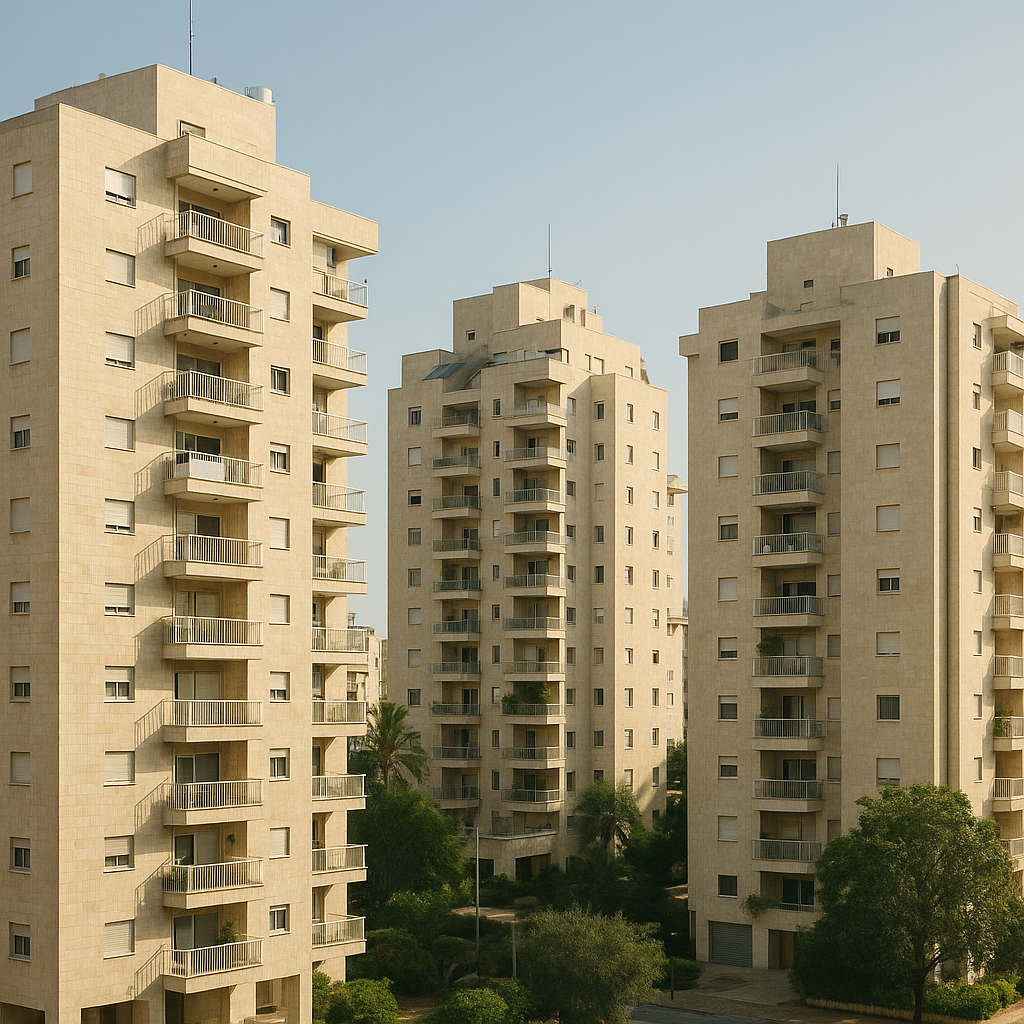
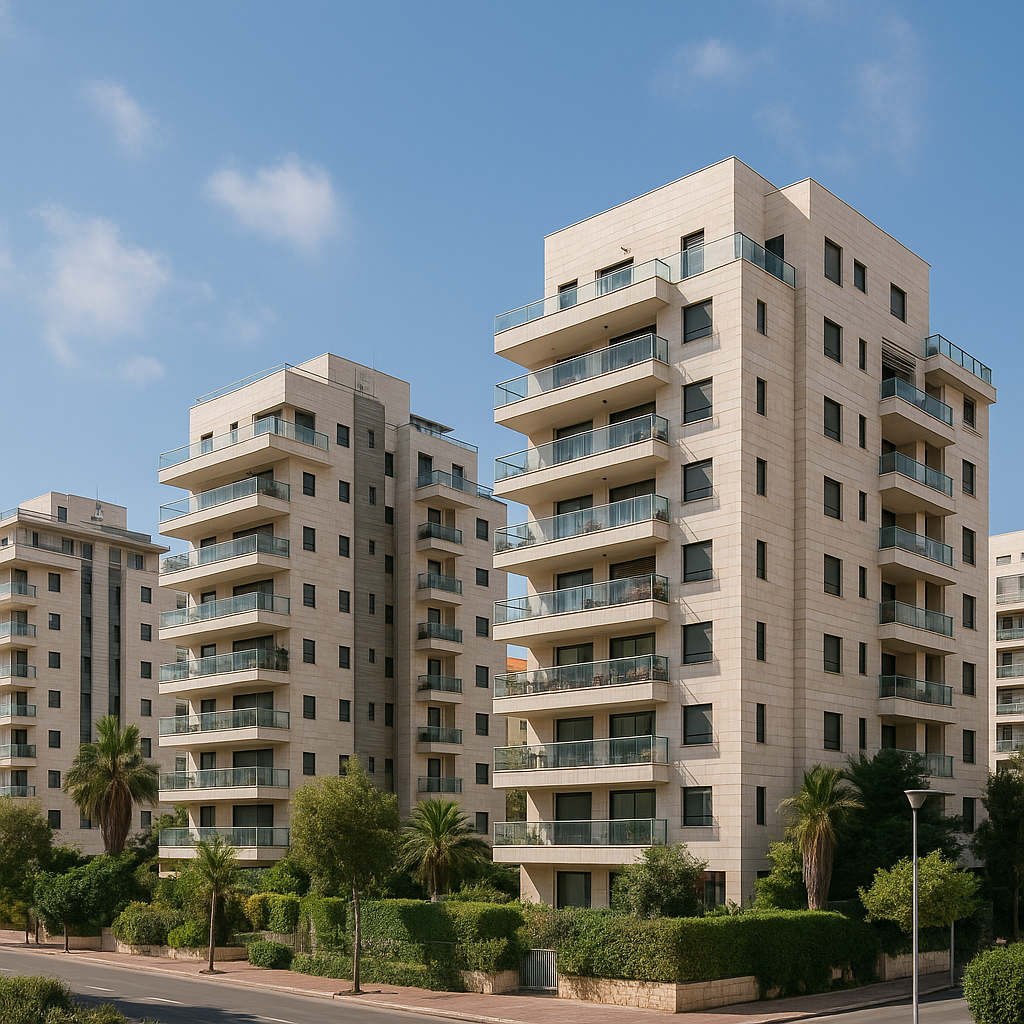
The architecture of Rehavia tells this story beautifully. The buildings are almost uniformly modest in scale and restrained in decoration. There are few of the grand Arab villas you find in Katamon, none of the ornate Templar houses of the German Colony. Instead, you find three or four-story apartment buildings with clean lines and simple proportions, their main concessions to beauty being the quality of their proportions, the careful placement of windows, and occasionally some decorative tilework or wrought iron. Many were designed by leading architects of the period, including German Jewish refugees who brought Bauhaus principles with them. These buildings were meant to be functional, modern, and above all democratic, avoiding any hint of the class distinctions and social hierarchies the founders had left behind in Europe.
The street plan reinforces this egalitarian aesthetic. The grid layout means no street is more important than another, no grand boulevards create hierarchy, no monumental architecture dominates. The streets are named for important figures in Jewish history and Zionist thought: Ramban, Rashba, Abarbanel, Ibn Ezra, medieval scholars and poets who represent the Jewish intellectual tradition. Walking through Rehavia, you’re meant to feel you’re in a neighborhood dedicated to learning and culture, not power and wealth.
Over the decades, Rehavia has changed, but perhaps less than any other central Jerusalem neighborhood. The original residents aged and passed away, their children often moving to other parts of Jerusalem or to Tel Aviv. Some apartments were inherited by grandchildren, others sold on the open market. Beginning in the nineteen eighties and accelerating through the nineties and two thousands, Rehavia began to gentrify, though in a way quite different from the dramatic transformation of neighborhoods like Katamon or the German Colony. The new residents were often wealthy professionals, high-tech executives, successful lawyers and physicians, people with money who appreciated Rehavia’s prestige, location, and quiet sophistication. Property values rose dramatically, making Rehavia one of Jerusalem’s most expensive neighborhoods.
Today’s Rehavia is home to perhaps eight to ten thousand residents, a relatively small population for such a large geographic area, reflecting the low building heights and generous spacing. The demographic has shifted toward the wealthy, though a significant number of elderly longtime residents remain, often in rent-controlled apartments that allow them to stay in a neighborhood they could never afford to enter today. There are also numerous diplomatic residences, as foreign governments and international organizations value Rehavia’s prestige and security.
Religiously, Rehavia is predominantly secular, perhaps seventy to eighty percent, with the remainder being traditional or Modern Orthodox. There’s virtually no ultra-Orthodox presence, and the neighborhood maintains a distinctly secular character. On Shabbat, most cars stay off the streets not because of religious prohibition but because of longstanding neighborhood norms and a sense of preserving the peaceful atmosphere. Many residents are not religiously observant but maintain certain traditions, attending synagogue on high holidays, hosting Passover seders, marking Jewish lifecycle events, expressing their Jewish identity culturally and nationally rather than religiously.
The Anglo population in Rehavia is relatively small compared to Baka or even the German Colony, perhaps ten to fifteen percent. The neighborhood attracts more international professionals, diplomats, and academics than typical Anglo immigrants. What Rehavia does have is a very international character, with residents from all over the world drawn by professional opportunities with international organizations, universities, research institutions, and embassies. You’re as likely to hear English, French, Spanish, or Russian on Rehavia’s streets as you are Hebrew, giving the neighborhood a cosmopolitan atmosphere quite different from more Israeli-oriented neighborhoods.
The real estate market in Rehavia reflects its prestige and desirability. Prices are astronomical, among the highest in Jerusalem and comparable to the best addresses in Tel Aviv. A three-bedroom apartment in a well-maintained building can easily cost six to nine million shekels, roughly one point seven to two point six million dollars. Larger apartments or penthouses in prime buildings can reach twelve to fifteen million shekels or more. Even small one or two-bedroom apartments command three to five million shekels. Rentals are equally expensive, with a three-bedroom apartment renting for eleven to sixteen thousand shekels per month, three to four thousand five hundred dollars.
What’s remarkable is that despite these astronomical prices, many buildings in Rehavia remain somewhat shabby and poorly maintained. The Bauhaus architecture, while historically significant and aesthetically pleasing, was built with modest materials and limited budgets. Many buildings suffer from water damage, cracked plaster, worn staircases, and outdated infrastructure. The va’ad bayit, the building committee, often struggles to get agreement from all owners to undertake major renovations, especially when some are elderly longtime residents living on pensions who cannot afford special assessments. This creates a fascinating paradox: you pay millions for an apartment in a neighborhood of extraordinary prestige, but you may live in a building with peeling paint, no elevator, and a leaky roof.
Renovation within individual apartments is common and often extensive. Buyers gut interiors completely, installing modern kitchens and bathrooms, upgrading electrical and plumbing systems, creating open floor plans, and adding air conditioning and modern conveniences. But the building exteriors often remain shabby, creating a strange disconnect between the luxury within individual apartments and the worn appearance of the buildings themselves. There’s also ongoing tension between preservation and modernization. Rehavia’s Bauhaus architecture is considered historically significant, with some buildings receiving heritage protection, but this limits what owners can do to improve and update their properties.
Education is one of Rehavia’s greatest strengths and a major reason families choose the neighborhood. The public schools serving Rehavia are among Jerusalem’s best and most prestigious. Gymnasia Rehavia is perhaps the crown jewel, an academic high school with a reputation for excellence stretching back generations. Admission is competitive, based on entrance exams and academic performance, and graduating from Gymnasia Rehavia carries real prestige in Israeli society. The school emphasizes academic rigor, critical thinking, humanities and sciences, and has produced countless leaders in Israeli society.
For younger children, schools like Henrietta Szold elementary provide excellent secular education with strong academics and a humanistic approach. There are also several private and democratic schools in or near Rehavia appealing to progressive families. For religious families, the options within Rehavia itself are limited, and most send children to schools in nearby neighborhoods like Katamon or Baka.
The neighborhood is also home to numerous educational and cultural institutions. The Hebrew University’s main administration was historically in Rehavia, and the neighborhood remains closely connected to the university community. Various research institutes, cultural centers, and educational organizations have their offices here. Libraries, including excellent public libraries, serve the neighborhood. Music schools and art studios reflect the cultural sophistication of the residents.
Religious life in Rehavia reflects the secular majority. There are several synagogues, but they’re smaller and less prominent than in religious neighborhoods. The Great Synagogue of Jerusalem is on the border between Rehavia and the nearby King David Street area, an impressive building that serves more as a showpiece and tourist destination than a neighborhood synagogue, though locals do pray there. There are also several smaller congregations, including some with more progressive orientations appealing to secular Jews seeking some connection to tradition without Orthodox observance.
The atmosphere on Shabbat in Rehavia is distinctive and rather wonderful. Most cars stay off the streets, creating a peaceful quiet rare in Jerusalem. Families walk to parks and visit friends. The occasional worshipper walks to synagogue, but far more people use Shabbat for reading, cultural activities, or simply resting. There’s a respect for Shabbat as a day of rest and family time, even among those who don’t observe it religiously. This secular Shabbat culture is something special and increasingly rare in Israel, where neighborhoods tend to be either religiously observant with enforced Shabbat restrictions or completely secular with normal weekday activity.
The commercial infrastructure in Rehavia is deliberately limited. The founders wanted a residential neighborhood, not a commercial district, and this ethos continues. There are some small shops, a few cafés, a small supermarket or two, and basic services, but nothing like the restaurant and café scene of the German Colony or even Baka. For shopping, dining, and entertainment, Rehavia residents walk to nearby neighborhoods, particularly the German Colony, the city center, or Mamilla. This lack of commercial development maintains the quiet, residential character but means you can’t just walk downstairs for coffee or groceries in most parts of Rehavia.
The streets of Rehavia are lined with trees, creating leafy canopies that provide shade in summer and a sense of being in a garden rather than a city. There are numerous small parks and gardens scattered throughout the neighborhood, and the overall green cover is exceptional. Independence Park, a large public park, borders Rehavia to the north, providing extensive green space for recreation. The streets themselves are quiet, with relatively little traffic, and the atmosphere is one of calm and tranquility, a sharp contrast to the hustle and bustle of the city center just a fifteen-minute walk away.
Walking in Rehavia is genuinely pleasant. The wide sidewalks, the shade from mature trees, the interesting architecture, and the general sense of safety and order make it a neighborhood where you want to stroll. On a spring evening, you’ll see elderly residents sitting on benches, young parents pushing strollers, joggers making circuits of the quiet streets, and students walking to the library. The human scale, the absence of high-rises, and the setbacks that create front gardens all contribute to a pedestrian-friendly environment.
Transportation in Rehavia is excellent. The neighborhood is centrally located and well-served by buses connecting to all parts of Jerusalem. The light rail is accessible with a short walk. For those commuting to Tel Aviv, the journey is challenging as from any Jerusalem neighborhood, but Rehavia’s central location makes reaching the train station somewhat easier. Many Rehavia residents work in Jerusalem itself, taking advantage of the proximity to government offices, the Hebrew University, hospitals, and the city center.
Parking in Rehavia is challenging but not as nightmarish as in the German Colony. Many buildings have some parking, either original or added over the years, and street parking, while competitive, is generally available with a resident permit. The lower building density and the fact that many elderly residents don’t drive means parking pressure is somewhat less than in denser neighborhoods.
The social scene in Rehavia is intellectual and cultural rather than overtly social in the way of Baka or the German Colony. People gather for book discussions, attend concerts and lectures, participate in political organizations and civil society groups. There’s less of the café culture and less emphasis on visible socializing. Friendships tend to be deep and longstanding rather than casual and frequent. Many residents value privacy and quiet, preferring intimate gatherings to large parties.
For families with children, the social scene often centers around schools, with school communities creating networks of friendships and mutual support. There are playgroups for young children, after-school activities ranging from music lessons to sports to academic enrichment, and a general expectation that children will be intellectually engaged and culturally literate.
The atmosphere in Rehavia is distinctly adult-oriented compared to family-centric neighborhoods like Baka. You see fewer children on the streets, fewer playgrounds, less of the organized chaos of young family life. This reflects both the demographics, with many residents being older professionals, empty-nesters, or retirees, and the culture, which emphasizes quiet cultivation over energetic activity.
One of Rehavia’s most striking features is the demographic mix of extreme wealth and modest pensions existing side by side. In one apartment building, you might find a high-tech millionaire who paid seven million shekels for a penthouse and renovated it with another two million, living two floors above an eighty-five-year-old retired teacher paying a few hundred shekels monthly in rent control who has lived in the same small apartment since nineteen fifty-seven. This creates interesting dynamics, sometimes harmonious, sometimes tense, as people with vastly different resources and worldviews share the same building and neighborhood.
The elderly longtime residents of Rehavia represent a dying breed in Israeli society. These are often people who immigrated in the thirties or forties, helped build the state, served in the military or government or academia, and lived modestly but with dignity their entire lives. They speak beautiful, grammatically perfect Hebrew with European accents. They remember Jerusalem when it was small and provincial. They’ve watched their neighborhood transform from a place for idealistic socialists and struggling intellectuals into a preserve for the wealthy. Some feel pride in Rehavia’s success and prestige. Others feel displacement and loss, mourning the passing of the old Labor Zionist culture that once dominated Israeli life.
The political culture in Rehavia leans heavily left, reflecting its roots in Labor Zionism and its secular, educated population. This is a neighborhood where you’ll see more peace movement bumper stickers than mezuzahs on doorposts, where opposition to settlements and support for two-state solutions are mainstream positions, where Netanyahu is generally viewed with suspicion or disdain. This political homogeneity creates a certain insularity, a sense that Rehavia represents the “good” Israel of education, humanism, and rationality, in opposition to what residents often see as the dangerous nationalism and religious fundamentalism rising in other parts of Israeli society.
This political orientation also shapes attitudes toward the neighborhood’s history. Unlike in Katamon where the displacement of Arab residents in nineteen forty-eight happened violently and visibly, Rehavia was built on land that was largely empty or purchased from Arab landowners in the twenties and thirties. There’s less direct confrontation with the Palestinian narrative, though thoughtful residents recognize that even legally purchased land was part of a larger Zionist project that ultimately led to Palestinian displacement.
The challenges facing Rehavia are perhaps less dramatic than those facing neighborhoods undergoing rapid gentrification, but they’re real nonetheless. The aging building stock needs major investment, but organizing collective action among apartment owners with vastly different resources is extremely difficult. The demographic shift toward the wealthy is changing the neighborhood’s character, replacing the intellectual elite with a financial elite that may not share the same cultural values. The rent control system that allows elderly longtime residents to stay is gradually expiring as residents pass away, accelerating the demographic transformation.
There’s also a question about relevance. Rehavia represents a particular vision of Zionism, secular, European-influenced, socialist-oriented, that no longer dominates Israeli society. The rise of religious Zionism, the growing political power of Mizrahi communities, the dominance of high-tech capitalism over socialist ideals, all of these trends make Rehavia seem increasingly like a museum piece, a beautiful artifact of a vanished era. The neighborhood risks becoming a place that looks backward to past glories rather than forward to future possibilities.
Yet Rehavia endures and remains deeply desirable. The location is unbeatable, the architecture historically significant, the schools excellent, the atmosphere cultured and sophisticated. For certain types of people, secular Jews who value education and culture, international professionals seeking a peaceful neighborhood near embassies and international organizations, academics and intellectuals who appreciate Rehavia’s history and ethos, the neighborhood remains ideal.
Walking through Rehavia today, you can still feel the vision of its founders. The tree-lined streets, the modest architecture, the abundant gardens, the quiet dignity, all speak to ideals that seem almost quaint in our contemporary world: that intellectual achievement matters more than wealth, that restraint is more elegant than ostentation, that community spaces should be democratic and accessible, that a neighborhood should cultivate both privacy and social connection. Whether these ideals can survive in an era of extreme inequality and market-driven development remains an open question.
What’s certain is that Rehavia represents something precious and increasingly rare: a neighborhood with deep historical roots and cultural identity, a place where architecture and urban planning were deployed in service of ideals and values, where for generations the best and brightest chose to live not because it was the most expensive or exclusive but because it represented their aspirations for what Jewish life in the Jewish homeland could become. That Rehavia has become expensive and exclusive is perhaps inevitable given its location and prestige, but something has been lost as well as gained in that transformation. The neighborhood remains beautiful, desirable, and distinguished, but it’s no longer quite the same egalitarian garden suburb that its founders imagined, where a Supreme Court justice and a school teacher could be neighbors and equals, united by shared values and a common vision for building a better society in the ancient Jewish homeland.